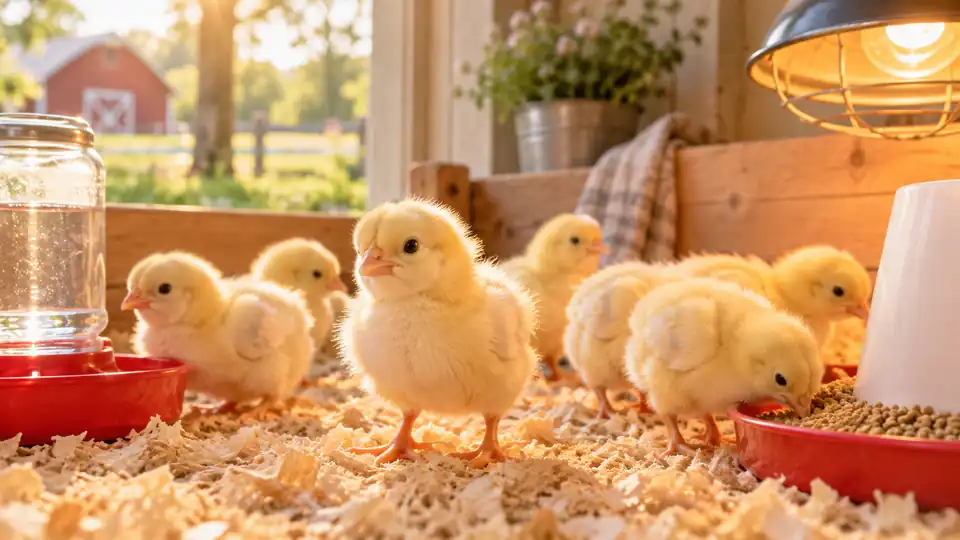
Keep fresh, clean water available at all times. Check the waterer several times through the day so it does not run dry or become contaminated, and clean/refill it at least daily. Hot conditions, larger chicks and a crowded brooder can require more frequent checks and refills.
Water is essential from the beginning of brooding. University of Minnesota Extension says chicks and pullets should always have access to fresh, clean water, while Mississippi State Extension recommends clean, fresh, cool water at all times and daily cleaning, rinsing and refilling of waterers.
How often should you check the water?
There is no useful once- or twice-a-day drinking schedule for chicks. Leave an appropriate chick waterer available continuously and make checking it part of your normal brooder routine.
- Check that water is available when you inspect the chicks.
- Refill before the waterer becomes empty.
- Replace water sooner if bedding, feed or droppings contaminate it.
- Clean the waterer and provide fresh water every day.
- During hot conditions, check more often because poultry water use can rise substantially.
What about newly arrived chicks?
Have the brooder, feed and water ready before chicks arrive. Penn State Extension notes that, where possible, chicks should reach a brooder with feed and water within 24 hours after hatch. For small groups, briefly showing chicks the water by gently dipping the tip of the beak can help them locate it.
How much water do chicks need?
Consumption changes with age, flock size, feed and temperature, so providing enough capacity and access is more useful than trying to ration an exact amount per chick.
As a practical equipment guide, University of Minnesota Extension recommends a one-gallon water fountain per 50 chicks during the first two weeks, then increasing waterer number or capacity as birds grow. Penn State's brooding guidance gives another starting point of one quart of water per 25 chicks. These figures are planning guides for waterer capacity and access—not limits on how much chicks may drink.
How do you keep chick water clean?
Brooder water quickly collects feed and litter. Mississippi State recommends emptying, cleaning, rinsing and refilling waterers daily. Raising a suitable waterer so its edge is around the birds' back height as they grow can also reduce contamination and spills.
- Remove wet litter around the waterer.
- Keep the waterer stable so chicks cannot easily tip it.
- Increase or resize waterers as chicks grow.
- Do not allow manure or heavily soiled litter to remain in the drinking tray.
Water during hot weather
Heat changes water needs. University of Minnesota Extension reports that poultry may drink two to four times their normal amount during heat stress. Keep sufficient drinking space available and water fresh and cool; check the system more frequently during unusually hot conditions.
What should make you check immediately?
If chicks become unusually noisy, inactive, crowded around the waterer, or the brooder becomes very hot, inspect their water supply and overall brooder conditions immediately. Mississippi State notes that rapid, high-pitched chick sounds can be associated with discomfort including hunger or thirst, but behavior alone cannot diagnose a specific problem.
A simple daily water routine
- Morning: empty, clean and refill the waterer.
- Through the day: confirm it remains full enough, clean and accessible.
- After spills: replace wet bedding and stabilize the waterer.
- Hot days: inspect and refresh water more frequently.
- As chicks grow: increase capacity and adjust waterer height.
University of Minnesota Extension — Raising Layer Chicks and Pullets
Penn State Extension — Brooding of Domestic Fowl
Mississippi State University Extension — Grow Healthy Chicks
Setting up heat? Use the chick brooder temperature chart by age and adjust it using chick behavior.