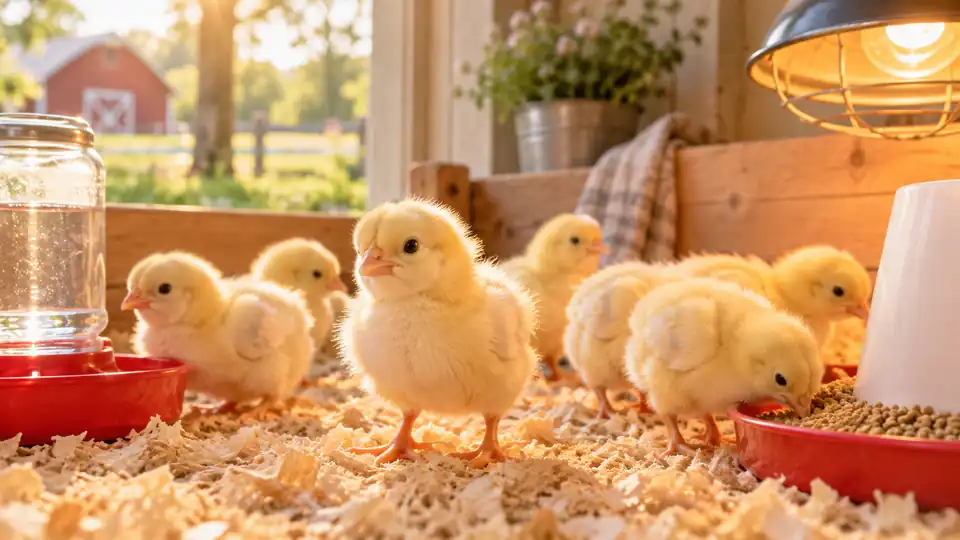
Start day-old chicks at about 90–95°F (32–35°C) at chick level during the first week. Reduce supplemental heat by about 5°F (roughly 3°C) each week as chicks feather out. Use chick behavior to fine-tune the setup.
Brooder temperature matters most when chicks are very young because they cannot regulate body temperature as effectively as adult birds. The useful goal is not to make the entire brooder one exact temperature. It is to provide a warm zone and enough cooler space that chicks can choose where they are comfortable.
Week-by-week brooder temperature chart
Want a quick age-based result? Use the Brooder Temperature Calculator for an instant Fahrenheit and Celsius starting target, then fine-tune it using chick behavior.
| Age | Warm-zone target | Approx. Celsius |
|---|---|---|
| Week 1 | 90–95°F | 32–35°C |
| Week 2 | 85–90°F | 29–32°C |
| Week 3 | 80–85°F | 27–29°C |
| Week 4 | 75–80°F | 24–27°C |
| Week 5 | 70–75°F | 21–24°C |
| Week 6+ | Often little or no supplemental heat if fully feathered and ambient conditions are suitable | Use behavior and local conditions |
Chick Brooder Temperature Chart
| Chick age | Warm-zone starting range | Development cue | Weekly checks |
|---|---|---|---|
| Week 1 · Days 1–7 | 90–95°F · 32–35°C | Newly hatched; limited feathering | □ Temp □ Water □ Bedding |
| Week 2 · Days 8–14 | 85–90°F · 29–32°C | Early wing feathers developing | □ Temp □ Drafts □ Space |
| Week 3 · Days 15–21 | 80–85°F · 27–29°C | More active; feathering increases | □ Temp □ Behavior □ Space |
| Week 4 · Days 22–28 | 75–80°F · 24–27°C | Substantial body feathering | □ Temp □ Behavior □ Safety |
| Week 5 · Days 29–35 | 70–75°F · 21–24°C | Often mostly feathered | □ Night temp □ Feathering |
| Week 6+ | Assess need from feathering and conditions | Many fully feathered chicks need little or no added heat in mild conditions | □ Night temp □ Weather □ Behavior |
Starting ranges apply to the warm zone at chick height. Always provide a cooler escape area and adjust using behavior, feathering, ambient temperature and equipment instructions. This is general husbandry guidance, not veterinary advice.
This is a practical starting schedule, not a rule that overrides the chicks themselves. Breed, feathering, room temperature, drafts, humidity and the type of heat source all affect comfort.
Where should you measure the temperature?
Measure at approximately chick height in the warm area rather than high above the floor. University extension guidance commonly specifies chick-level measurement because that is the temperature the birds actually experience.
It is also useful to know the temperature away from the heat source. Chicks need room to move out of the warm zone if they become too hot.
Chick behavior is your best temperature check
The illustration shows the pattern to look for from above. Distribution across the brooder often reveals a problem faster than one thermometer reading.
Too cold
Chicks cluster directly beneath the heat.
Comfortable
Chicks spread naturally across warm and cool zones.
Too hot
Chicks move to the outer edges away from heat.
Chicks are spread naturally through the brooder, eating, drinking, exploring and resting without persistent distress calls.
Chicks pack tightly under the heat source, chirp loudly or pile together instead of moving around normally.
Chicks stay as far from the heat as possible, may spread their wings, pant or appear unusually inactive.
How to lower brooder heat safely
Reduce heat gradually rather than making large overnight changes. Depending on your heat source, this may mean raising a securely suspended lamp, lowering a thermostat setting, changing the heat-plate height, or reducing heated area.
Check chicks after every meaningful adjustment, including later in the evening when room temperatures may fall.
When can chicks stop using supplemental heat?
Many chicks need progressively less supplemental heat as they develop feathers. Around five to six weeks, fully feathered chicks may be comfortable without added heat when ambient conditions are mild. Cold weather, incomplete feathering, very young birds or large temperature swings can extend the need for heat.
Do not remove heat based only on age. Look at feathering, nighttime temperature and how the chicks behave when supplemental heat is reduced. Before moving chicks outdoors, use our when can baby chicks go outside guide to check feathering, weather and predator protection together.
Heat-source safety
Heat plates generally reduce fire risk compared with exposed heat lamps, but every device must be installed according to its manufacturer’s instructions. Keep cords protected from pecking and water, keep bedding away from hot components, and never rely on a clamp alone to support a heat lamp. Use a second secure attachment and test the complete setup before chicks arrive.
Troubleshooting temperature problems
- Correct thermometer, unhappy chicks: check for drafts, damp bedding, crowding and whether the reading is taken at chick height.
- Warm days and cold nights: reduce daytime heat without removing the chicks’ safe nighttime option too early.
- Only one hot spot: enlarge the comfort zone while preserving a cooler escape area.
- Different-sized chicks: provide enough warm perimeter and space so smaller chicks are not pushed away.
Common brooder-temperature mistakes
- Heating the whole brooder equally: chicks need a cooler escape area.
- Leaving first-week heat unchanged: older chicks can become heat stressed if the brooder is never adjusted.
- Measuring too high: temperatures above chick level may not reflect what the birds experience.
- Ignoring behavior: a thermometer cannot show drafts, crowding or individual chick comfort.
- Unsafe lamp mounting: heat lamps should be securely supported away from bedding and flammable material.
Brooder temperature FAQ
What temperature should a brooder be for day-old chicks?
Use about 90–95°F (32–35°C) at chick height in the warm zone, with cooler space available. Adjust using chick behavior.
How much should I lower brooder temperature each week?
A common starting point is about 5°F, or roughly 3°C, per week. Feathering, room temperature and behavior may justify a slower or faster change.
How can I tell if chicks are too cold?
Cold chicks commonly huddle tightly beneath the heat, pile together and chirp persistently instead of spreading out to eat and explore.
When can chicks live without a heat lamp or heat plate?
Many fully feathered chicks need little or no added heat around five to six weeks in mild conditions, but nighttime temperature and behavior matter more than age alone.
This temperature schedule was cross-checked against Penn State Extension, University of Minnesota Extension, and Mississippi State University Extension. Exact needs vary with housing, breed and climate.
Baby Chick Care: Your First 7 Days
Go back to the complete first-week checklist covering brooder setup, feed, water, bedding and daily checks.
Feeding baby chicks? See our complete guide to what baby chicks eat, including chick starter, water, grit, treats and when to change feed.