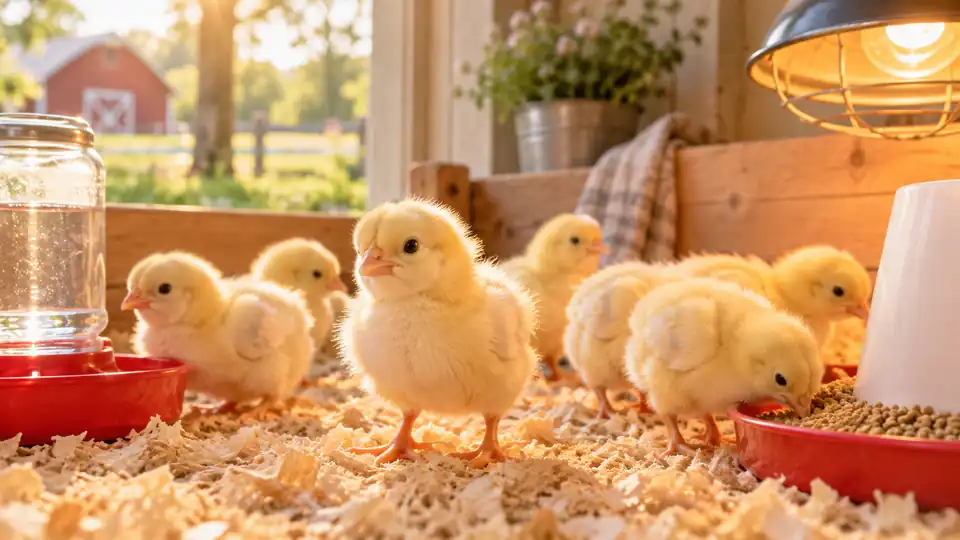
For most home brooders, use clean, dry pine shavings or another absorbent, low-dust poultry litter. Give chicks secure footing and remove wet patches quickly. Plain paper towels can provide extra traction over the litter during the first few days.
Bedding is easy to overlook because it looks simple, but it does several jobs at once: it gives chicks traction, absorbs moisture, insulates them from a cold floor and helps keep manure from building into a wet surface.
1. Pine shavings are a strong all-around choice
Penn State Extension describes pine shavings as a preferred litter material for chicks, and Mississippi State also recommends fresh pine shavings in brooding areas. They are absorbent, widely available and give young feet a textured surface to grip.
Choose shavings rather than very fine sawdust. Penn State advises avoiding sawdust or other fine litter during the first weeks because very young birds may eat too much of it.
2. Paper towels can help during the first few days
A useful early setup is to place plain paper towels over the underlying litter. This gives newly hatched chicks a stable, non-slip surface while they learn the difference between feed and bedding. Replace the towels whenever they become wet or dirty.
3. How deep should brooder bedding be?
\nBedding also takes up usable floor area. For a flock-size estimate before you choose the brooder, use the Brooder Size Calculator.
Extension recommendations vary with housing style, but a few inches of clean litter is a useful starting point. Penn State describes roughly 2–3 inches in floor brooders, while other extension programs may recommend deeper litter in larger brooding areas.
For a small home brooder, depth matters less than keeping the surface dry, cushioned and stable underfoot. Add clean material as the bedding compresses or becomes soiled.
4. Other bedding materials
Practical, absorbent and widely recommended for poultry brooders.
A workable litter where available; Mississippi State and UGA list them as useful poultry bedding.
Can work when designed for animal bedding, but moisture management still matters.
Used in poultry housing, but it can mat or cake more readily than good wood shavings.
5. Bedding and surfaces to avoid
- Bare newspaper: too slippery as the chick's walking surface.
- Bare smooth plastic or wood: lacks the traction young legs need.
- Very fine sawdust: easy for young chicks to ingest and often dusty.
- Wet or moldy bedding: replace it rather than trying to dry it in place.
- Strongly aromatic or questionable materials: choose bedding intended for poultry or small-animal use.
6. The area around the waterer needs the most attention
Most brooder wet spots begin around the waterer. Place the waterer on a stable raised platform once chicks can comfortably reach it, and remove damp bedding as soon as you notice it. Wet litter can cake, smell and make the brooder harder to keep sanitary.
Do not solve spills by making water difficult to reach. Fresh water should remain available at all times.
7. How often should bedding be changed?
There is no single calendar interval that fits every brooder. A small brooder with many chicks may need attention several times a day, while a larger well-managed brooder stays dry longer.
Use the bedding itself as the signal. Remove wet patches promptly, top up clean litter when needed, and do a fuller change when the surface becomes heavily soiled, compacted or difficult to keep dry.
Simple brooder bedding checklist
- Start with clean, dry, absorbent litter.
- Make sure chicks have good traction everywhere they walk.
- Use plain paper towels temporarily if extra first-day traction is useful.
- Check the waterer area for damp litter several times a day.
- Remove wet or compacted patches instead of covering them indefinitely.
- Keep replacement bedding dry and protected in storage.
Bedding guidance was cross-checked against Penn State Extension, Penn State laying-flock guidance, and Mississippi State University Extension.
Baby Chick Care: Your First 7 Days
See how bedding fits with brooder temperature, starter feed, water and the rest of the first-week routine.
Feeding baby chicks? See our complete guide to what baby chicks eat, including chick starter, water, grit, treats and when to change feed.
Setting up heat? Use the chick brooder temperature chart by age and adjust it using chick behavior.